
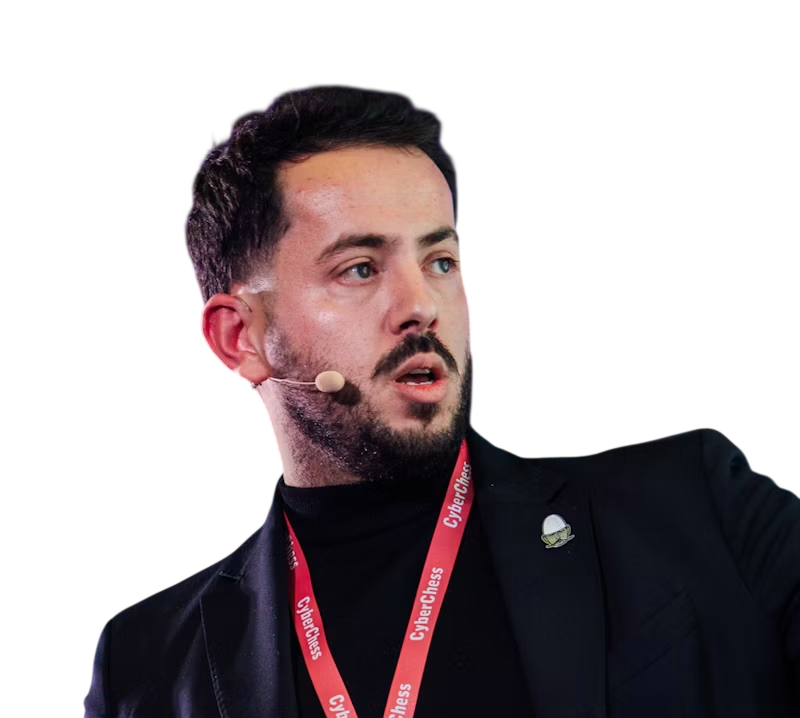
Erblind Morina
Principal Consultant
IBM X-Force
Principal Incident Response Consultant at IBM X-Force, where leads the cloud incident response service and acts as incident commander on incidents. He also contributes to threat intelligence and the Security Intelligence podcast. His technical focus areas include incident response, digital forensics, threat intelligence, cloud security, and AI security.He co-founded Sense Cyber Research Center, a non-profit raising the cybersecurity baseline across the Western Balkans, and has spent over seven years building the regional security community through DEF CON Group Pristina, and Balkan Secure conference. He speaks at RSA Conference and BSides events. He holds GIAC GCFR, GCFA, and GCTI certifications.
Speaker sessions
Briefings and Arsenals | Confirmed Speakers | No Session Assigned
Placeholder session for confirmed speakers without an assigned session, allowing them to be pushed to Swapcard and Visit.
- 07:30
- Tue
- 01 Dec
Stage:
Briefing Stage 2
Sessions Type:
Keynote
The Invoice Is the Payload: Industrial-Scale Cloud and AI Hijacking
Ransomware is bad, but at least you have options: pay, do not pay, restore from backup, absorb downtime, call the FBI. Good and bad choices, but choices. What about the cloud bill after cryptojacking? Or the AI invoice after weeks of a stolen key being abused through resale infrastructure on Telegram? No decryptor. No negotiation. No wallet to trace. The attacker reaches their objective, the cloud provider gets paid, and you get the invoice.This talk is about a problem I keep seeing in incident response: cloud and AI hijacking is too easy to monetize. It often starts with something simple: one leaked service account, one exposed API key, one overprivileged identity, or one poisoned dependency stealing environment variables. From there, the platform does what it was designed to do: scale quickly, activate services quickly, and convert usage into billing.I will use two anonymized war stories to show the pattern. The first is a GCP cryptojacking incident from a leaked service account. The second is an LLMjacking case that ran for weeks through stolen AI access. Different services, same shape: access, validation, resource activation, monetization, weak detection, and a painful invoice.The bigger problem is fragmentation. Finance sees spend. Security sees alerts. Cloud teams see configuration. AI teams see usage. Attackers exploit the gaps between all of them. Budget alerts are not incident detection. Quotas are not always abuse controls. IAM is still treated as configuration, even though it is the real perimeter.
- 15:00
- Tue
- 01 Dec
Stage:
Briefing Stage 1
Sessions Type:
Keynote